Category: Debt Collection Platform
-
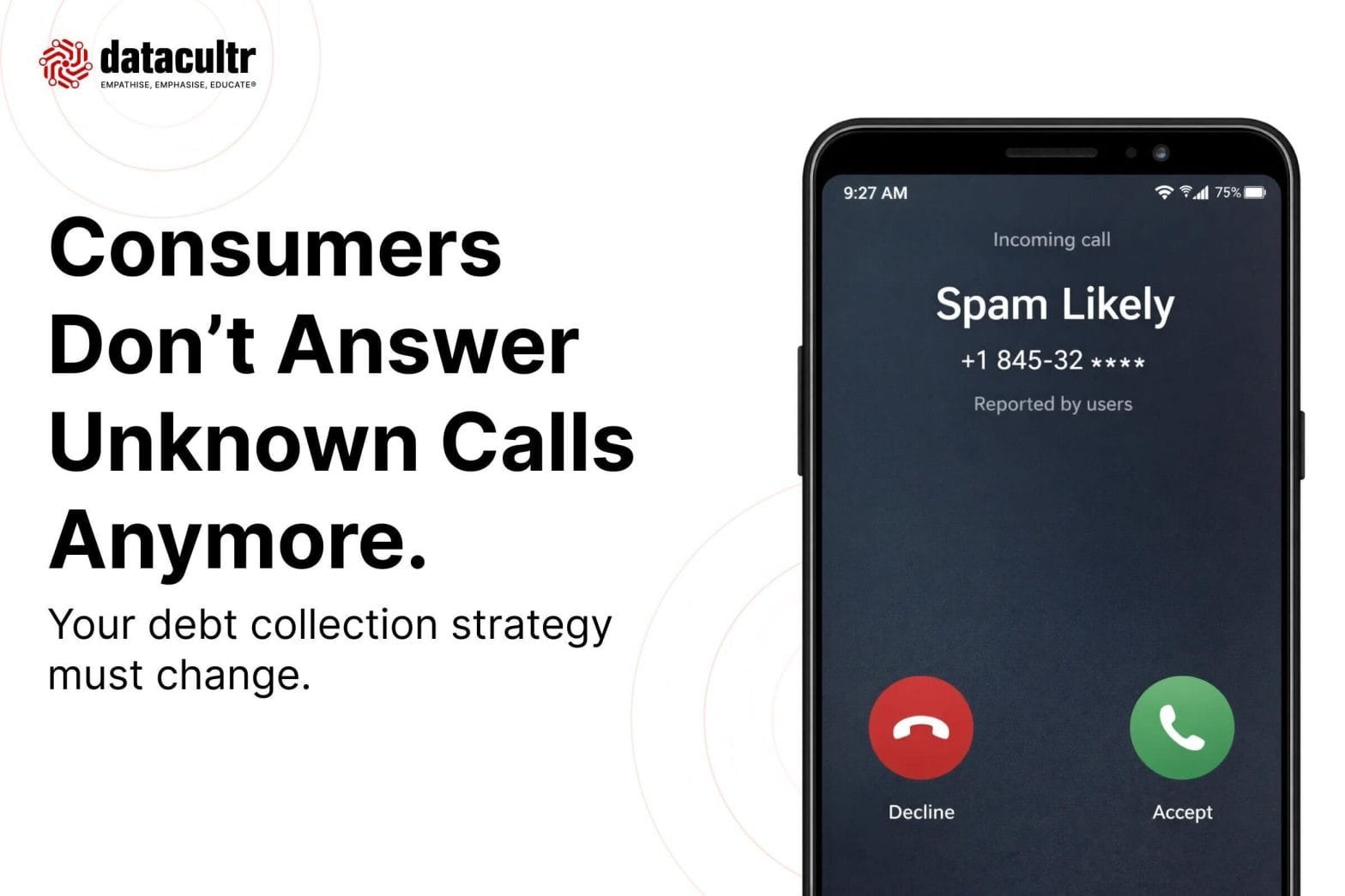
How Changing Consumer Expectations Are Reshaping Debt Collection Strategy
Debt collection isn’t getting harder because customers don’t want to pay. It’s getting harder because customers don’t want to engage the way they used to. Once upon a time, people opened letters and answered unknown calls. Some even opened their doors to strange salesmen! Today, that trust is gone. Customers don’t engage; they defend. Spam…
-

The New Battleground: Financial Scams and the Future of Digital Debt Collection
The fraud era has made digital debt collection complex. Datacultr makes it intelligent. In 2024, consumers reported losing over $12.5 billion to fraud, a 25% increase from the previous year. This surge isn’t just a number; it highlights an urgent need for lenders and fintechs to adapt their digital debt recovery strategies to a borrower-centric,…
-

Cellphone Financing Challenges and Solutions for Fintechs
Fintechs are betting big on cellphone financing. But are they ready for the risks? For millions of individuals, the high upfront cost of a smartphone is the single biggest barrier to entering the digital economy. According to GSMA, nearly 3 billion people remain offline globally, largely because they can’t afford a device. For fintechs, this…
-

Reach. Recover. Repeat. The Future of Digital Debt Collection
The omnichannel illusion is real; more channels don’t always mean more reach, especially when none are guaranteed to deliver. That’s the trap many digital debt collection strategies fall into: layering email blasts, SMS campaigns, even outbound calls, assuming something will stick. On paper, it looks airtight. Yet, repayment rates hover, right-party contacts lag, and NPLs…
-

The Future of Collections: Predictive, Proactive, Pre-Due
Still chasing payments after the due date? It’s time to rethink your collections strategy. At Datacultr, after powering over 18 million device financing loans across 30 countries, we’ve seen a clear trend: The most effective collections start before the due date, not after. By mapping a proactive customer journey from loan initiation to repayment, our…
-

How Datacultr’s Device Lock Encourages Regular Payments for Device Financing in South Africa
Home Device financing in South Africa is a lifeline for millions striving to participate in the digital economy. However, market challenges like limited access to credit and high device costs make smartphone ownership a hassle. Datacultr is playing a major role in overcoming this challenge of affordability by making device financing secure and accessible across…
-

Right Party Contact (RPC): The Secret to Higher Collection Success
Home In the collections world, achieving a high Right Party Contact (RPC) rate is critical. It directly impacts the effectiveness of collection campaigns, recovery rates, and the overall efficiency of the debt recovery process. But as any collections professional knows, reaching the right person at the right time isn’t always easy. That’s why improving your…
-

Transforming Debt Collection in Vietnam with Device Lock Technology
Home Vietnam’s Financial Sector Faces a Debt Crisis: Can Innovation Be the Answer? As Vietnam enters 2025, its financial sector faces growing uncertainty. With the expiration of Resolution 42/2017/QH14, banks and financial institutions are scrambling to recover bad debts in a shifting legal landscape. Once a crucial framework for repossessing collateral and managing non-performing loans…
-

Empathise, Emphasise, Educate!
Home The New Age of Collections: A Shift from Pressure to Partnership For too long, debt collection has been viewed as a battle—a relentless pursuit where borrowers feel trapped and lenders feel forced to play hardball. But what if collections could be different? What if, instead of fear and frustration, the process inspired trust, understanding,…
-

Redefining Debt Recovery with Datacultr’s Digital Promise to Pay (PTP)
Home Promise to Pay (PTP) is a critical metric for debt recovery, directly impacting cash flow and recovery cycles for any financier. Yet, traditional methods for securing PTP commitments are riddled with challenges. From contact-ability issues to non-acknowledgment of commitments, the process is Unempathetic, time-consuming, resource-intensive, and costly. What if this entire process could be…